
More Famous Cases

Not Guilty by Reason of Insanity (NGRI) Verdicts
- Andrea Yates (Texas, 2001)
- Parent Gender: Female
- Number of Victims: 5
- Victims’ Age: 6 months, 2 years, 3 years, 5 years, and 7 years old
- Method: Drowning in a residential bathtub
- Verdict: Not Guilty by Reason of Insanity (NGRI) in her 2006 retrial; permanently committed to a state mental hospital.
- Dena Schlosser (Texas, 2004)
- Parent Gender: Female
- Number of Victims: 1
- Victims’ Age: 10 months old
- Method: Amputation of the infant’s arms with a knife
- Verdict: Not Guilty by Reason of Insanity (NGRI) in 2006 due to profound, religious-themed command hallucinations; committed to a state mental hospital.
- Sheryl Massip (California, 1987)
- Parent Gender: Female
- Number of Victims: 1
- Victims’ Age: 6 weeks old
- Method: Running over the infant with a car
- Verdict: Not Guilty by Reason of Insanity (NGRI); the presiding judge used a rare legal mechanism to overturn an initial jury conviction due to severe postpartum psychosis and hallucinations.
- Otty Sanchez (Texas, 2009)
- Parent Gender: Female
- Number of Victims: 1
- Victims’ Age: 3 weeks old
- Method: Killing and mutilation
- Verdict: Not Guilty by Reason of Insanity (NGRI) due to a complete state of detachment from reality and command hallucinations; committed to a maximum-security state psychiatric facility.

Active Trial / Pending Verdict
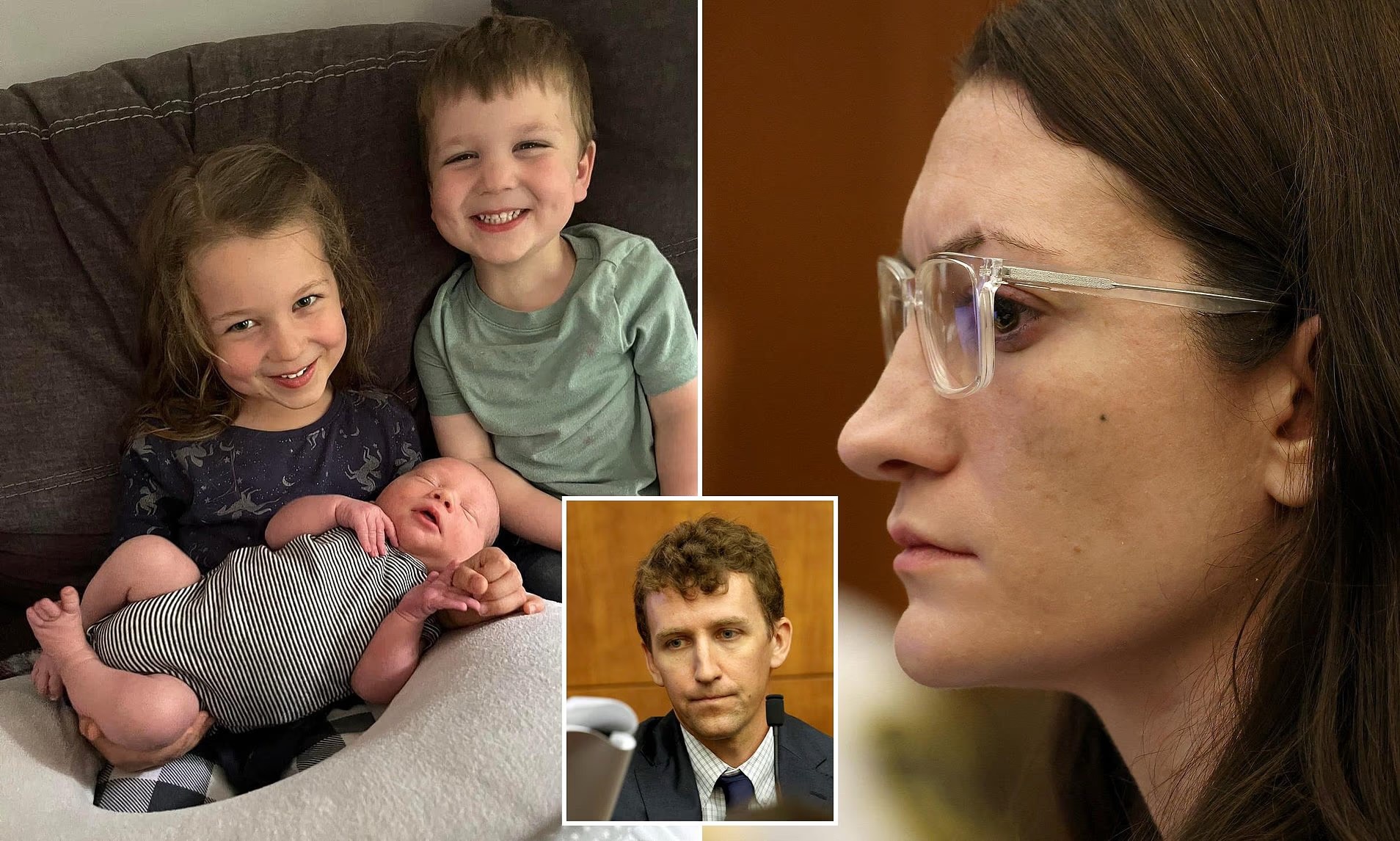
- Lindsay Clancy (Massachusetts, 2023)
- Parent Gender: Female
- Number of Victims: 3
- Victims’ Age: 8 months (Callan), 3 years (Dawson), and 5 years old (Cora)
- Method: Strangulation with exercise bands
- Verdict: Plead Not Guilty; the trial is currently active as the defense argues a lack of criminal responsibility due to postpartum psychosis.
Convictions and Alternative Legal Outcomes

- Michelle Kehoe (Iowa, 2008)
- Parent Gender: Female
- Number of Victims: 2 (1 deceased, 1 survivor)
- Victims’ Age: 2 and 7 years old
- Method: Throat-cutting with a knife
- Verdict: Convicted of first-degree murder and attempted murder in 2009; the jury rejected the insanity defense and she was sentenced to life in prison without parole.
- Susan Smith (South Carolina, 1994)
- Parent Gender: Female
- Number of Victims: 2
- Victims’ Age: 14 months and 3 years old
- Method: Drowning by driving a car into a lake with the children strapped inside
- Verdict: Convicted of murder; motive was linked to a relationship dynamic rather than postpartum illness. Sentenced to life in prison.
- Diane Downs (Oregon, 1983)
- Parent Gender: Female
- Number of Victims: 3 (1 deceased, 2 survivors)
- Victims’ Age: 3, 7, and 8 years old
- Method: Shooting with a firearm
- Verdict: Convicted of murder, attempted murder, and criminal assault; motive was to remain in a relationship with a man who wanted a child-free lifestyle. Sentenced to life in prison plus 50 years

Hearing from a Father: Patrick Clancy’s Perspective
The 911 Call and Scene
To further argue premeditation, the prosecution played the emotional 911 recording for the court. Patrick Clancy could be heard wailing and screaming as he discovered his children—Cora (5), Dawson (3), and Callan (8 months)—in the basement.
“She killed the kids,” Patrick said during the call.
Hospital Conversation
Patrick testified that when he spoke with Lindsay while she was in the hospital following the tragedy, her focus was not on the children:
- “She didn’t talk about our kids; she talked about what she went through,” he noted.
Mental Health & Medication Struggles
Describing his wife’s deteriorating mental health, Patrick emphasized her struggle with severe depression and anxiety:
- Desperation for Help: She desperately wanted to find the right medication and took all prescriptions exactly as directed.
- Worsening Condition: Patrick insisted her condition visibly worsened after she was prescribed Seroquel.
- Severe Symptoms: By December 2022, Lindsay was extremely sleep-deprived, highly anxious, and would sometimes rock back and forth on the sofa.
Devotion as a Mother
Despite her mental health struggles, Patrick remembered her deep love for their children:
- Dedicated Parent: He described her as a “very dedicated” mother who “did everything” for the kids.
- Cherished Memories: She regularly read to them, made up songs, and took hundreds of photos.
- Personal Touches: “She used to make green eggs and ham for Cora because she liked that book,” Patrick told the court.
- Love for Dawson: He reaffirmed that Lindsay loved Dawson very much and held no resentment toward him
Della’s POV
My family home was filled with weapons of all sorts. Inside the house, we kept a few guns, and the kitchen was stocked with an extensive arsenal of sharp tools. Right under the living room TV, my mother kept her exercise bands alongside her workout tapes. She was a naturally strong, fit woman. Before having her last two babies, she had been a high school track star, and that athleticism never really left her. Growing up with four brothers meant she wasn’t delicate by any means; she possessed a quiet, hidden physical strength.
The rest of our family’s weapons were scattered across the property, which spanned six acres and included our 2,000-square-foot house. Most of the heavy firepower stayed out in the two-story barn, which housed the larger guns and what was left of my dad’s collection.
Then there was my older sister, Blake. At sixteen, Blake was far from meek and was the only one who could truly stand up to our mother when necessary. As the middle child, I spent most of my time retreating into my own world, staying in my room and out of the way. To be completely honest, if Blake hadn’t been home that day, the dynamic would have been entirely different. Without her there as a buffer, the younger two and I were much more vulnerable. Blake was forced to grow up and act like an adult while she was still just a child. In truth, I don’t think I was strong enough back then to act as any kind of safety net. It wasn’t until after this event that I finally began to mature beyond my years, following the path Blake had already taken.
Della’s 911 Call
The number of times I could have—or should have—called 911 during my childhood surpasses the fingers on both of my hands. Yet, none of us ever dialed those three numbers. Living on six acres, there was always more than enough space to drown out the feral screams of our family fights.
The Razor-Thin Line: Why We Survived
When you look at the statistics of extreme domestic breakdown, you realize how easily a house like ours can become a crime scene. I often look at high-profile filicide cases—like Andrea Yates or Lindsay Clancy—and see the terrifying structural similarities. You have an isolated property, a mother unspooling under immense psychological or situational pressure, a house full of vulnerabilities, and a handful of very young, dependent children trapped in the blast radius. In those cases, the darkness won. The system failed, the isolation swallowed them whole, and the outcome was fatal.
When I analyze why our story didn’t end in a similar, horrific headline, I realize our survival came down to a single variable: Blake.
In the tragic anatomies of filicide, the victims are almost always too small, too young, or too terrified to decode the shifting air in the room. They cannot see the tipping point until it has already crossed over into lethal violence. But at sixteen, Blake wasn’t a helpless bystander. She had been forged by our environment to be hyper-vigilant. She was old enough to look at our mother, see past the maternal mask, and accurately articulate the immediate, lethal danger we were all in.
Because Blake could read the room, she didn’t just hide; she acted. She became the safety valve that the system never provided for us. She was able to mentally outmaneuver the chaos and physically get us out of that house safely before the situation turned deadly—either for the younger kids and me, or for our mother herself.
Living on six acres meant nobody was coming to save us because nobody could hear us. The difference between survival and tragedy in a volatile home often depends entirely on who is standing in the doorway when the breaking point arrives. For us, it was a sixteen-year-old sister who refused to let us become a statistic.
The Modern Dumping Ground: From Asylums to Incarceration
Our survival in that house was a miracle born of a teenager’s hyper-vigilance, but it should never have been Blake’s job to save us. In a functioning society, there would have been a safety net. Instead, families like mine are left to navigate a silent, systemic vacuum—one created by a mental health crisis that our country refuses to properly solve, choosing instead to criminalize it.
When we look at cases like Andrea Yates, Lindsay Clancy, or the countless unnamed mothers and fathers unraveling behind closed doors, we are looking at the collateral damage of a broken historical pivot.
In the early 19th century, a person experiencing a severe psychiatric break or suffering from profound, delusional psychosis would have been committed to an asylum. The system back then was deeply flawed, often cruel, and rightfully dismantled during the deinstitutionalization movement of the late 20th century. But when we tore down the walls of those psychiatric institutions, we never built the community-based care centers we promised. We didn’t solve the illness; we just evicted the patients.
Today, the criminal justice system has become the default dumping ground for America’s mental health crisis.
Our jails and prisons are now the largest psychiatric facilities in the country. We have swapped hospital gowns for orange jumpsuits. Instead of providing early, aggressive medical intervention to unspooling parents before they reach a lethal breaking point, our system waits. It watches from a distance as a crisis escalates on an isolated piece of property, and it only steps in once the worst has already happened. The state chooses to fund a prison cell over a psychiatric bed, treating a medical failure as a purely criminal one.
When a mother crosses the line into filicide, society reacts with retroactive horror, scrambling to prosecute a tragedy that could have been predicted weeks or months prior. The courtrooms and jail cells fill up with sick people who needed a stabilizing clinical intervention long before they ever needed a defense attorney.
If Blake hadn’t been old enough to decode the danger in our home and drag us out of the blast radius, our family could have easily been swallowed by this exact pipeline. My mother might have ended up in a cell, or we might have ended up in the ground, all because the modern world has decided that punishing a mental health catastrophe is easier than treating one. We are forcing children to act as shields because our public institutions have completely abdished their duty of care.
The Unspoken Fractures
When we look closely at the devastating reality of postpartum mental illness—whether through the tragic headlines of the Lindsay Clancy trial or through the quiet, historical shadows of our own family living rooms—one truth becomes undeniable: severe maternal trauma is a crisis we are still failing to talk about honestly.
Growing up, postpartum depression wasn’t just a clinical term to me; it was a force that quietly reshaped my own family, deeply affecting my mother and altering the atmosphere of our home. Seeing how heavy, invisible, and terrifying that weight can be for a mother makes cases like Clancy’s hit with a visceral, haunting familiarity. Postpartum psychosis and severe depression strip away logic, autonomy, and safety, leaving both mothers and their children unprotected in a system that often misses the warning signs until it is far too late.
This isn’t the end of the conversation—it’s just the foundation.
What’s Next in the Fractured Motherhood Series
We are far from done exploring this space. Coming up in future installments:
- The Trial of Lindsay Clancy: We will continue following the court proceedings, examining the medical evidence, defense strategies, and legal precedents as the trial unfolds.
- Legacy & Inheritance: A deeper look into how my mother’s struggle with postpartum depression rippled through our family dynamic, and what it means to heal from generational maternal trauma.
Catch Up on the Series
- Part 1: The Hidden Dangers of Postpartum Crisis
- Part 2: Della’s Family Story – A Tale of How Postpartum Could Have Turned Deadly

◆ Life’s Random Inventory: From Sourdough to Daddy Issues
Be Real. Be Kind. Make Up Your Own Mind.
Leave a Reply