

Della D. Weiss
◆ Life’s Random Inventory

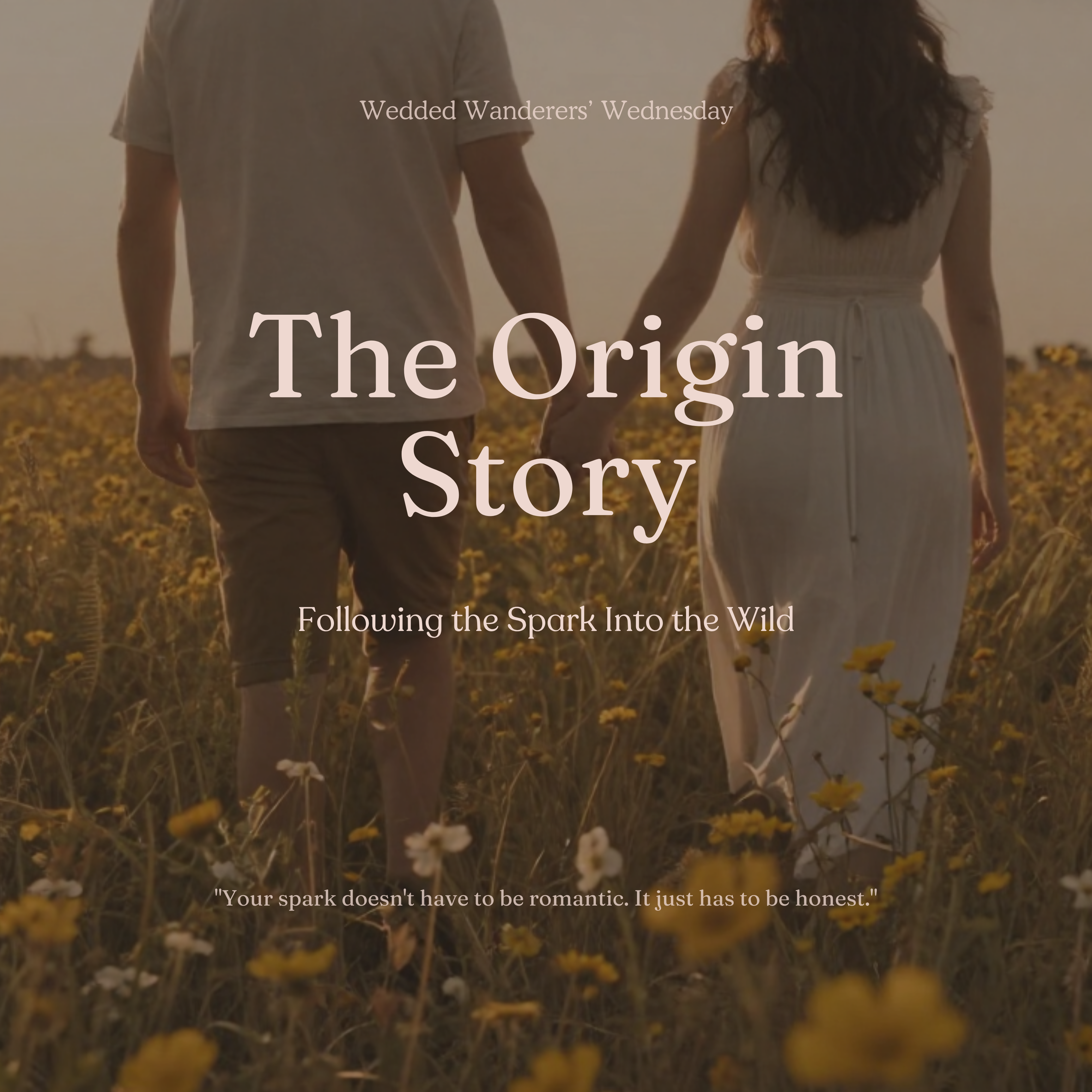
Every elopement begins with a spark. Sometimes it’s a romantic spark, sometimes it’s a “your insurance covers more specialists than mine” spark. Both are valid. Both can lead to a marriage certificate. One just comes with fewer Pinterest boards.
For us, there was no proposal. No ring. No dramatic gasp. On our second date, we mutually agreed marriage wasn’t on the menu — like two people confidently ordering off the “I’m emotionally stable enough to know myself” section. And for seven years, we stayed on that page.
But life is a chaotic aisle — sourdough starters, half‑used serums, and the occasional medical bill that makes you reconsider your entire philosophy. Eventually, practicality nudged us toward marriage. Not impulsively. Not romantically. Logically. If marriage ever made sense, we’d do it. And suddenly, it made sense.

When “Just Sign the Paper” Turns Into an Actual Event
I assumed we’d sign the certificate, grab lunch, and go home. Maybe tell people in ten years as a social experiment. My husband, however, had other plans — namely, involving his childhood best friend as the officiant. Which meant witnesses. Which meant… this was becoming a thing.
And if it was going to be a thing, it was going to have our flair. Documentation included.
My grandmother was a photographer, and I inherited her obsession with images — the contrast, the stories, the emotional subplots hiding in the corners. Even if I didn’t love photography, she did. Honoring her through photos felt right, especially since no family would be present. Our elopement became a quiet dedication to the people we loved, including the ones we no longer had.
💡 Guide Insight — Document Your Way 💡
Elopements thrive on intentional documentation. If family isn’t present — by choice or circumstance — photography becomes the witness. It’s a way to include people without physically including them. Think of it as emotional outsourcing.

Family Reactions & The Social Media Vanishing Act
Our families weren’t thrilled we’d avoided marriage for so long. Some were indifferent. Some were offended. Some were confused because our social media presence had evaporated years prior, leaving everyone unsure if we were alive, married, or living in a cabin with a goat named Persephone.
But photos? Photos were something we could give. A breadcrumb trail of proof that we were happy, healthy, and legally bound.
💡 Guide Insight — Managing Expectations 💡
Eloping doesn’t mean excluding — it means redefining involvement. If your family needs something tangible, give them what feels right for you: photos, a letter, a post‑event dinner, or simply the courtesy of being informed before your tax filing status changes.

The Timeline: A One‑Month Sprint
You could say we got “engaged” in October 2025 and married in November. Thirty days of planning — which, for me, was perfect. Long enough to enjoy the thrill, short enough to avoid spiraling into perfectionism.
We married in November, announced it at Thanksgiving, sent out formal announcements in January, and by February the novelty had worn off. We were ready to return to our routine — married, but otherwise unchanged.
💡 Guide Insight — Short timelines work 💡
Elopements thrive on condensed timelines. The shorter the runway, the fewer opportunities you have to spiral into overthinking, overspending, or accidentally transforming your “intimate moment” into a 200‑person catered spectacle with monogrammed napkins you didn’t even want. A month was plenty for us — the perfect balance between excitement and not losing our minds — and I’m convinced most elopements can be planned in under six months without breaking a sweat.
Once you cross the six‑month mark, the energy shifts. You’re no longer planning an elopement; you’re incubating a full‑blown event. More time means more room for obsession, more Pinterest rabbit holes, more “should we add this?” conversations, and more opportunities for the day to morph into something you never intended. Elopements are meant to be intentional, not marinated in months of indecision.
💡 Guide Insight — Keep it short 💡
A condensed timeline keeps your elopement aligned with its purpose: simple, meaningful, and free from the gravitational pull of traditional wedding expectations. The less time you give yourself to obsess, the more time you give yourself to enjoy.

Final Takeaway — The Spark Doesn’t Need to Be Hopelessly Romantic to Be Real
Our elopement wasn’t a fairy tale. It wasn’t a rebellion. It wasn’t a compromise. It was a decision made with clarity, humor, practicality, and a touch of chaos — which is to say, it was perfectly us.
And that’s the real guidepost here: Your elopement doesn’t need to follow tradition. It just needs to follow your truth — wherever it leads, however it looks, and whoever shows up (even if it’s just your officiant, two witnesses, and a camera).
We’ll wander again in a couple Wednesdays — until the next Wednesday we wander – DDW
Leave a Reply